Oil Change invoice template
Oil Change invoice template is used by quick-lube shops, dealerships, and independent mechanics to bill for oil and filter changes. List oil type (conventional, synthetic, blend), quantity, filter part number, labor, and disposal or shop fees. Separate line items help customers compare pricing and support warranty and service records.
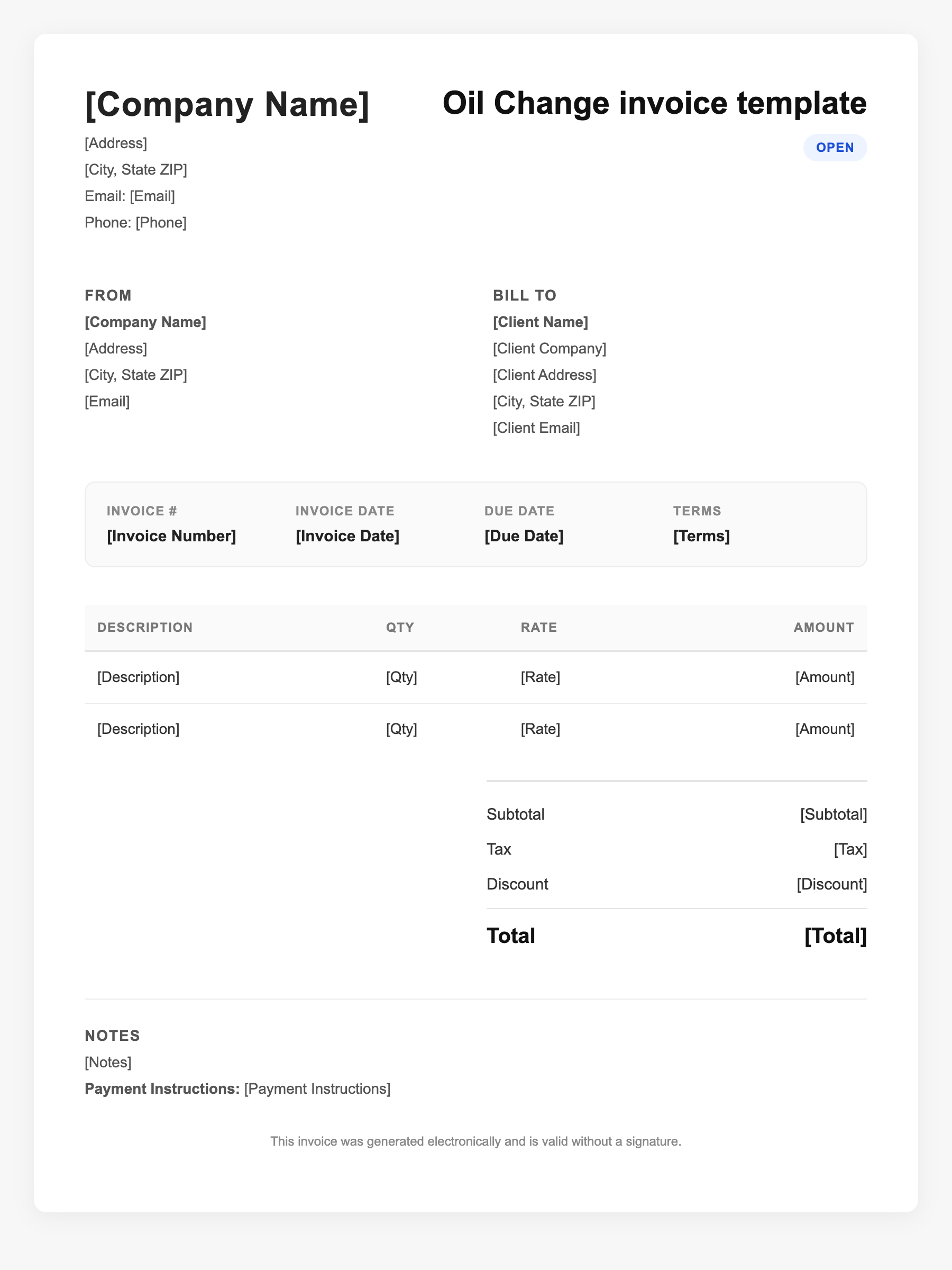
Oil Change invoice template Sample
Oil Change invoice template
123 Business Street, City, Country
Phone: (123) 456-7890
Email: contact@company.com
Oil Change invoice template
Bill To:
Client Name
Client Address
Client City, Country
Phone: (987) 654-3210
Email: client@example.com
Invoice #: 12345
Date: 2024-10-10
Due Date: 2024-11-10
| Item | Description | Qty | Price | Total |
|---|---|---|---|---|
| Service A | Itemized service or product | 1 | $100.00 | $100.00 |
| Service B | Additional line item | 2 | $50.00 | $100.00 |
| Subtotal | $200.00 | |||
| Tax (10%) | $20.00 | |||
| Total Due | $220.00 | |||
An invoice should include your business or name, the customer’s details, the date and invoice number, and a line-by-line breakdown of what was provided. Including payment terms—such as due on receipt, Net 15, or Net 30—helps you get paid on time and keeps records clear for taxes.
Supporting resources
| Resource | Type | Description |
|---|---|---|
| Full synthetic oil change | Benchmark | Typical range $75–$160; oil $25–$50, filter $5–$15, labor $40–$80. SUVs/trucks often $82–$215. |
| Conventional oil change | Benchmark | Typical $30–$55; labor $20–$40. Common for older or high-mileage vehicles. |
| Labor and location | Industry guide | Dealerships often 20–30% higher than independents; urban areas can run 5–15% above national averages. |
Frequently Asked Questions
- What should an oil change invoice include?
- Oil type and quantity, filter part number or description, labor (flat or hourly), disposal/shop fee, and vehicle info (year, make, model) for records.
- Why list synthetic vs conventional on the invoice?
- Customers and warranty claims need a record of oil type and viscosity. It also justifies price differences and supports repeat service scheduling.
- Should I include the vehicle VIN or mileage on the oil change invoice?
- Including year, make, model and optionally mileage helps with service history and warranty documentation; VIN is optional but useful for fleet or dealer records.