Medical invoice template
Medical invoice template supports patient billing statements and provider billing. It should show date of service, procedure codes (CPT/HCPCS), charges, insurance payments and adjustments, and patient responsibility. Clear statements improve collections and reduce disputes; include aging (current, 31–60, 61–90, 90+ days) when showing balances.
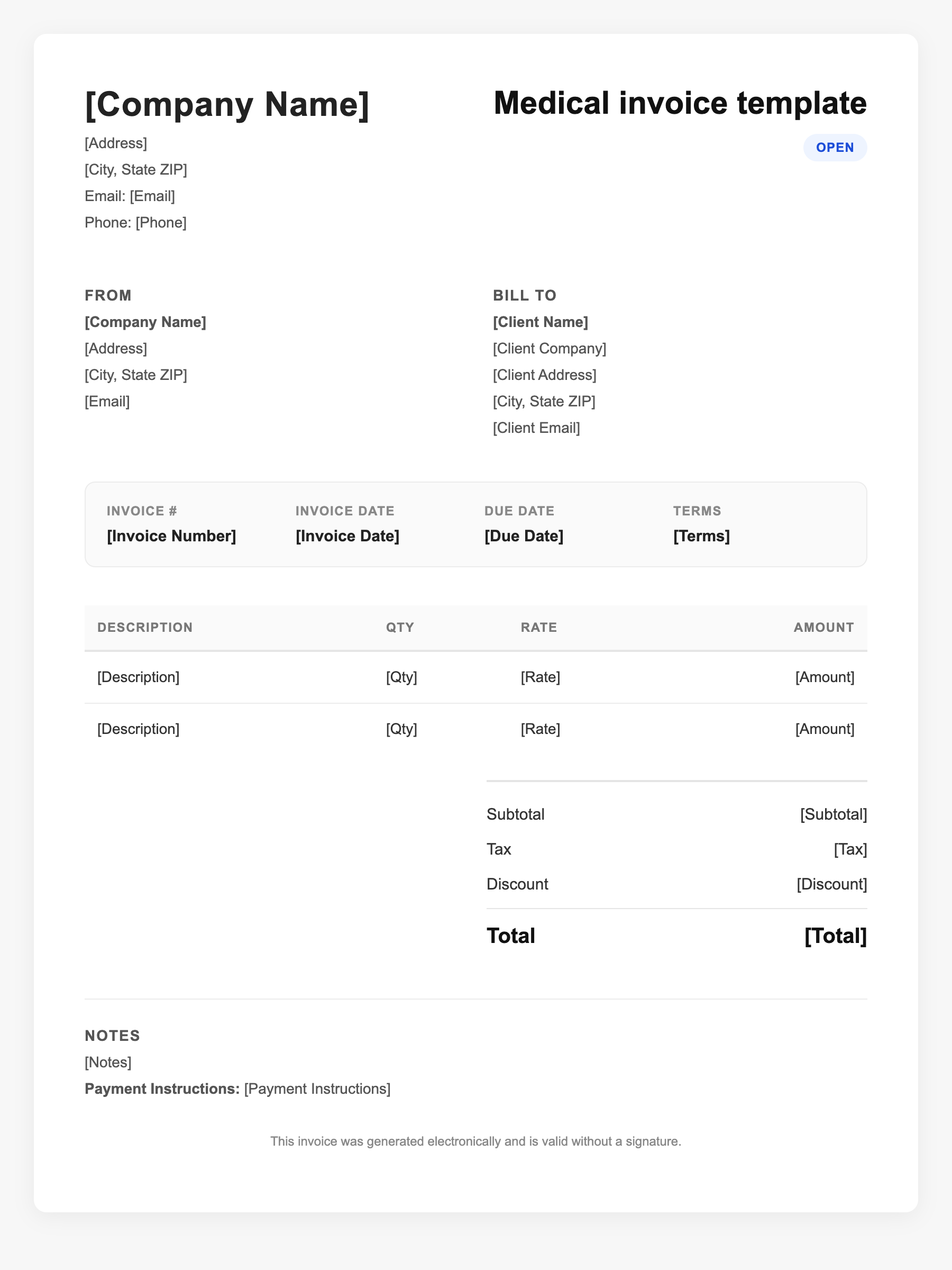
Medical invoice template Sample
Medical invoice template
123 Business Street, City, Country
Phone: (123) 456-7890
Email: contact@company.com
Medical invoice template
Bill To:
Client Name
Client Address
Client City, Country
Phone: (987) 654-3210
Email: client@example.com
Invoice #: 12345
Date: 2024-10-10
Due Date: 2024-11-10
| Item | Description | Qty | Price | Total |
|---|---|---|---|---|
| Office visit | Level 4 established patient | 1 | $185.00 | $185.00 |
| Lab work | Blood draw and processing | 1 | $65.00 | $65.00 |
| Subtotal | $250.00 | |||
| Tax (10%) | $25.00 | |||
| Total Due | $275.00 | |||
An invoice should include your business or name, the customer’s details, the date and invoice number, and a line-by-line breakdown of what was provided. Including payment terms—such as due on receipt, Net 15, or Net 30—helps you get paid on time and keeps records clear for taxes.
Supporting resources
| Resource | Type | Description |
|---|---|---|
| Patient statement components | Industry guide | Patient and provider info, service dates and codes, charges, insurance payments/adjustments, patient balance, payment instructions, and aging. Required for compliant patient billing. |
| Patient billing best practices | Checklist | Send statements monthly or after service; offer mail, email, and portal; include due date, payment methods, and contact; use clear language to reduce confusion. |
| HHS ERA/remittance | Government | Electronic remittance and payment advice standards for healthcare; relevant when reconciling insurance payments to patient statements. |
Frequently Asked Questions
- What is the difference between a patient statement and an EOB?
- An EOB comes from the insurer and explains what they paid. A patient statement comes from the provider and shows charges, insurance payments, and the amount the patient owes.
- What must a medical invoice or patient statement include?
- Patient and provider details, date of service, procedure codes and descriptions, charges, insurance payments and adjustments, patient responsibility, payment instructions, and statement date. Aging improves clarity for past-due balances.
- How often should we send patient statements?
- Common practice is monthly, or after services are rendered. Send follow-up statements for outstanding balances until paid; check your state and payer rules for timing.