Home Repair invoice template
Home repair invoice template is used by general contractors and home repair specialists to bill for repairs (electrical, plumbing, roofing, painting, etc.). An itemized invoice—separate lines for labor and materials, with quantities and rates—builds trust, speeds payment, and gives landlords, property managers, and insurers the detail they need for approvals and records.
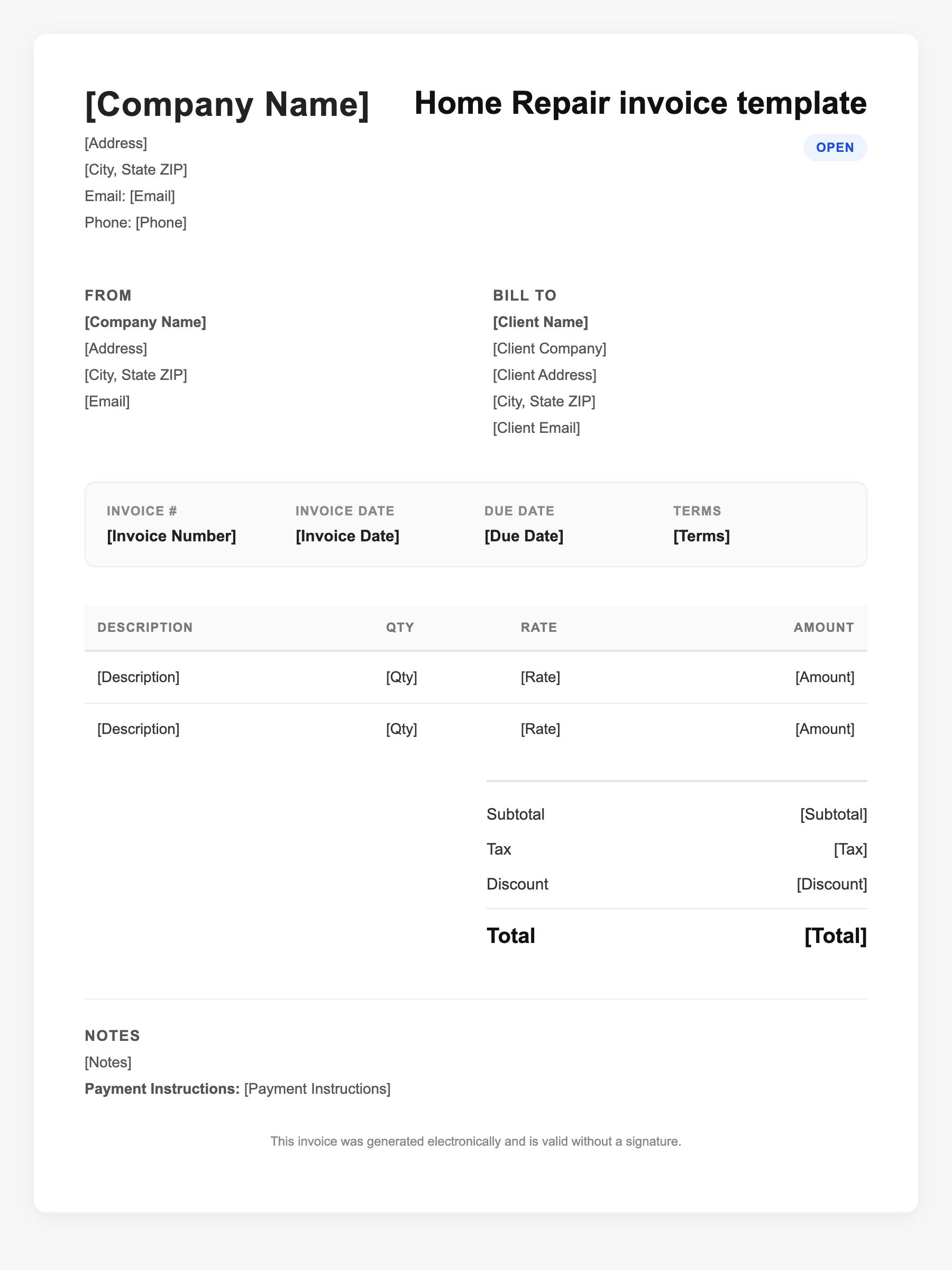
Home Repair invoice template Sample
Home Repair invoice template
123 Business Street, City, Country
Phone: (123) 456-7890
Email: contact@company.com
Home Repair invoice template
Bill To:
Client Name
Client Address
Client City, Country
Phone: (987) 654-3210
Email: client@example.com
Invoice #: 12345
Date: 2024-10-10
Due Date: 2024-11-10
| Item | Description | Qty | Price | Total |
|---|---|---|---|---|
| Service A | Itemized service or product | 1 | $100.00 | $100.00 |
| Service B | Additional line item | 2 | $50.00 | $100.00 |
| Subtotal | $200.00 | |||
| Tax (10%) | $20.00 | |||
| Total Due | $220.00 | |||
An invoice should include your business or name, the customer’s details, the date and invoice number, and a line-by-line breakdown of what was provided. Including payment terms—such as due on receipt, Net 15, or Net 30—helps you get paid on time and keeps records clear for taxes.
Supporting resources
| Resource | Type | Description |
|---|---|---|
| Itemized format | Checklist | Each task and cost on its own line; labor (hours × rate) and materials listed separately; subtotal, tax, total; reduces disputes and speeds payment. |
| Key elements | Checklist | Contractor and homeowner info; invoice number and date; service description per line; labor hours and rate; materials with qty and unit price; due date and payment terms. |
| Housecall Pro template | Template | Free home repair / handyman invoice template with line items and calculations. |
Frequently Asked Questions
- What should a home repair invoice include?
- Your business and client info, invoice number and date, each repair task with labor (hours × rate) and materials (qty × price), subtotal, tax if applicable, total, and payment terms.
- Why itemize instead of one lump sum?
- Itemization shows exactly what was done and what it cost, which helps with insurance, property managers, and warranty claims and reduces billing disputes.
- Should I list materials separately from labor?
- Yes. Separate labor and materials lines (with quantities and unit prices) are standard and make it easier for clients and third parties to verify and approve.