Dental Work invoice template
Dental Work invoice template is used to bill for specific dental procedures—fillings, crowns, cleanings, extractions, and other treatment. It should itemize each procedure with its CDT code, tooth or area, fee, and total. Whether the patient pays in full or the practice bills insurance first, a clear procedure-level invoice supports EOB reconciliation and patient statements.
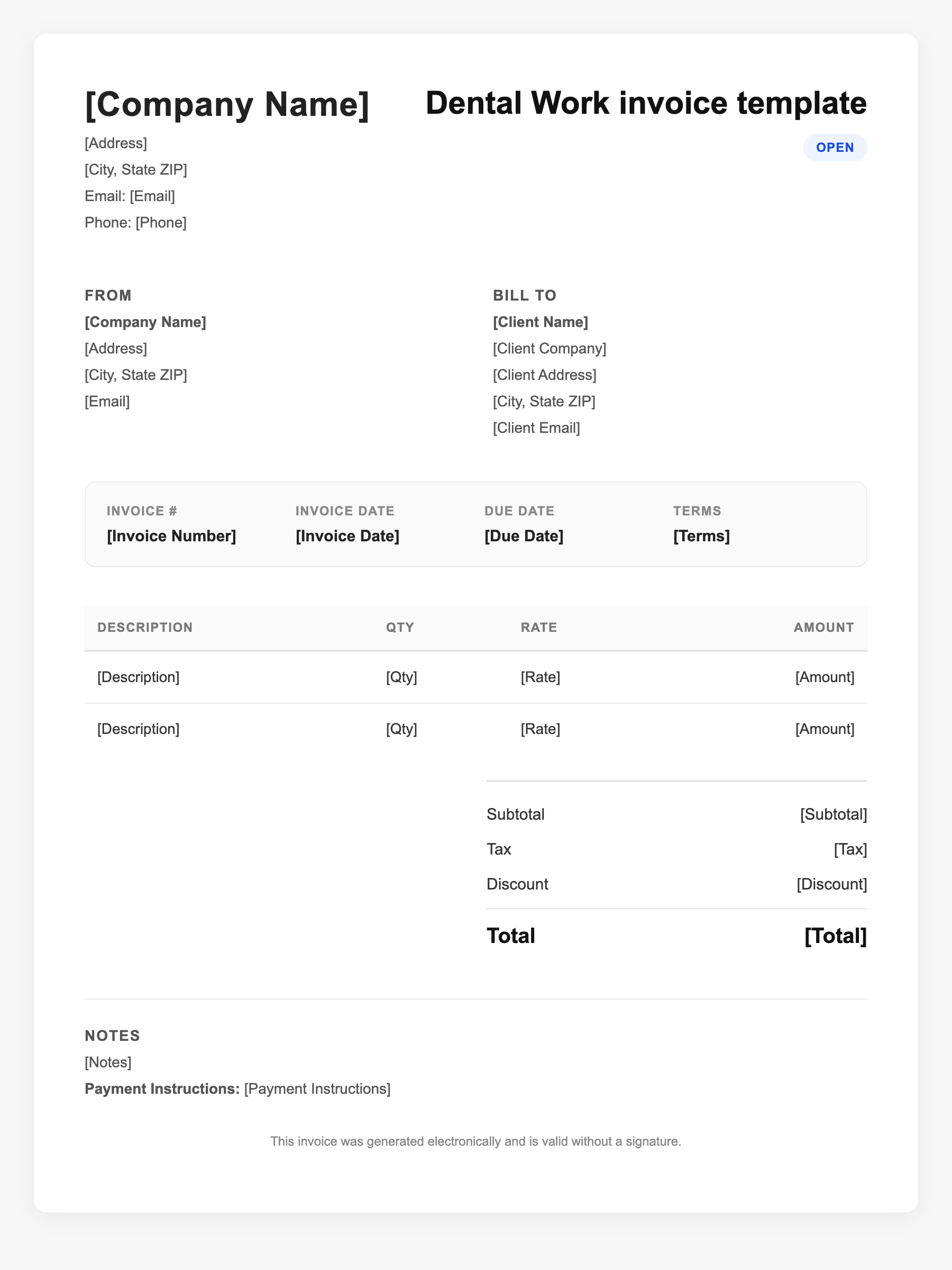
Dental Work invoice template Sample
Dental Work invoice template
123 Business Street, City, Country
Phone: (123) 456-7890
Email: contact@company.com
Dental Work invoice template
Bill To:
Client Name
Client Address
Client City, Country
Phone: (987) 654-3210
Email: client@example.com
Invoice #: 12345
Date: 2024-10-10
Due Date: 2024-11-10
| Item | Description | Qty | Price | Total |
|---|---|---|---|---|
| Service A | Itemized service or product | 1 | $100.00 | $100.00 |
| Service B | Additional line item | 2 | $50.00 | $100.00 |
| Subtotal | $200.00 | |||
| Tax (10%) | $20.00 | |||
| Total Due | $220.00 | |||
An invoice should include your business or name, the customer’s details, the date and invoice number, and a line-by-line breakdown of what was provided. Including payment terms—such as due on receipt, Net 15, or Net 30—helps you get paid on time and keeps records clear for taxes.
Supporting resources
| Resource | Type | Description |
|---|---|---|
| Dental billing workflow | Industry guide | Verify insurance, document treatment, code with CDT, submit claim, then bill patient for remaining balance; invoice should mirror the same procedure and fee detail. |
| Procedure-level invoicing | Checklist | For each procedure: date, CDT code, description, tooth/surface if applicable, fee. Show subtotal, insurance applied, and patient responsibility. |
| Dental invoice guide | Benchmark | Standard, recurring, insurance, and past-due invoice types; all should include procedure codes and amounts for consistency with claims and EOBs. |
Frequently Asked Questions
- What is the difference between a dental invoice and an insurance claim?
- The claim is sent to the plan with CDT codes and supporting documentation. The invoice (patient statement) shows the same procedures and fees and the amount the patient owes after insurance.
- Why put CDT codes on patient invoices?
- So the patient (and you) can match the invoice to the EOB and to the treatment chart. It reduces disputes and speeds payment.
- Should I invoice before or after insurance pays?
- Often you send the claim first, then bill the patient for the estimated or actual balance once the EOB is received. The invoice can show "estimated patient portion" or the final amount due.