Dental invoice template
Dental invoice template is used by dental practices to bill patients for treatment and to support insurance claims. It should list procedures with CDT codes, tooth/surface where applicable, fees per procedure, and patient portion after insurance. Aligning with the ADA claim form and CDT nomenclature keeps billing consistent and reduces claim delays and patient confusion.
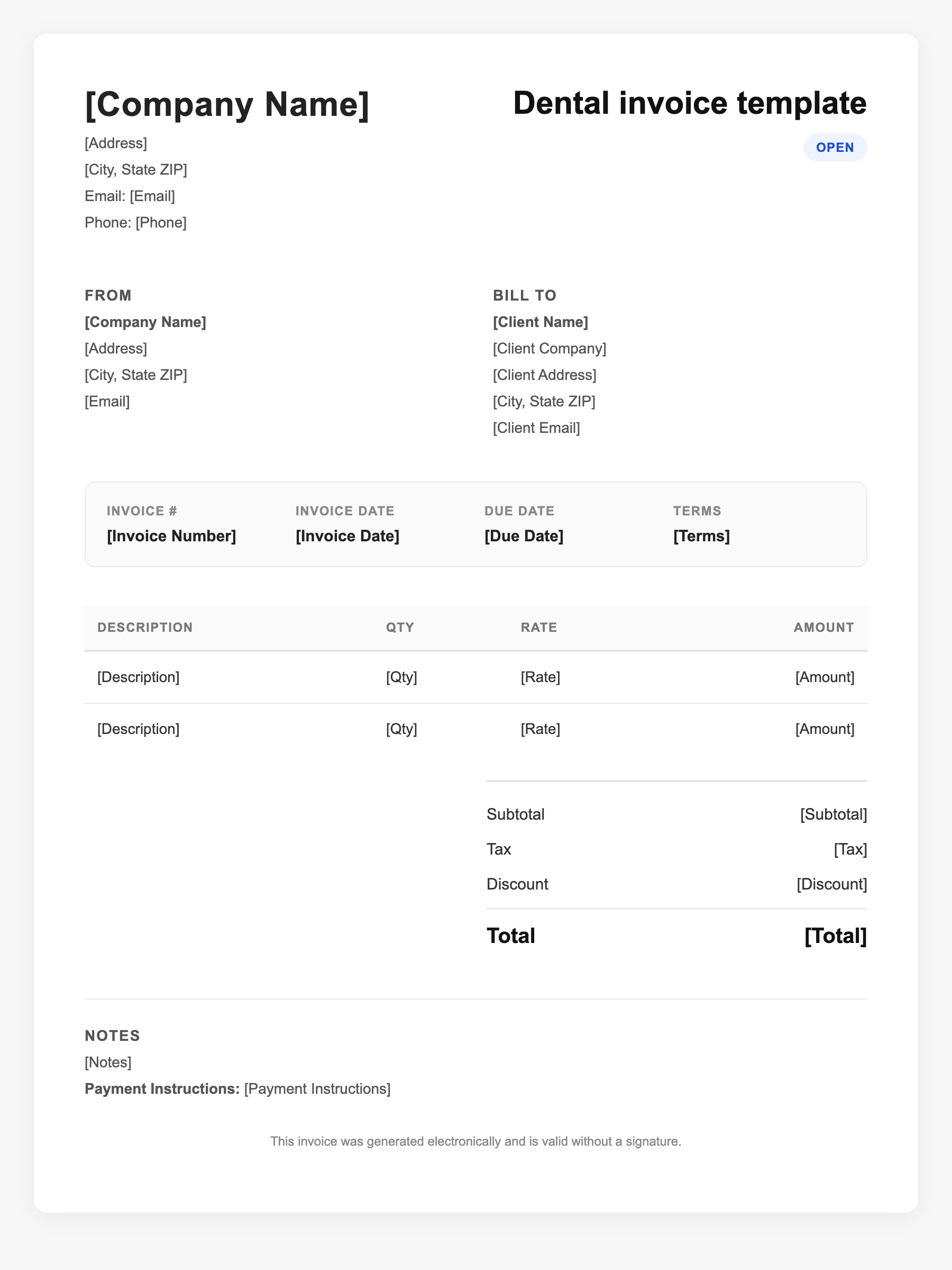
Dental invoice template Sample
Dental invoice template
123 Business Street, City, Country
Phone: (123) 456-7890
Email: contact@company.com
Dental invoice template
Bill To:
Client Name
Client Address
Client City, Country
Phone: (987) 654-3210
Email: client@example.com
Invoice #: 12345
Date: 2024-10-10
Due Date: 2024-11-10
| Item | Description | Qty | Price | Total |
|---|---|---|---|---|
| Service A | Itemized service or product | 1 | $100.00 | $100.00 |
| Service B | Additional line item | 2 | $50.00 | $100.00 |
| Subtotal | $200.00 | |||
| Tax (10%) | $20.00 | |||
| Total Due | $220.00 | |||
An invoice should include your business or name, the customer’s details, the date and invoice number, and a line-by-line breakdown of what was provided. Including payment terms—such as due on receipt, Net 15, or Net 30—helps you get paid on time and keeps records clear for taxes.
Supporting resources
| Resource | Type | Description |
|---|---|---|
| ADA CDT Code | Government | Code on Dental Procedures and Nomenclature (CDT) ensures consistent procedure documentation; use current CDT codes on claims and patient statements. |
| ADA Dental Claim Form | Government | Standard format for reporting procedures to plans: procedure date, tooth/surface, CDT code, description, fee, and diagnosis (ICD-10) where required. |
| Dental invoice types | Checklist | Patient statement (balance due), insurance claim (with codes and attachments), recurring for treatment plans; each should reference procedure codes and amounts. |
Frequently Asked Questions
- What are CDT codes on a dental invoice?
- CDT (Code on Dental Procedures and Nomenclature) codes are the standard identifiers for dental procedures. They appear on claims and patient statements so insurers and patients see exactly what was done.
- Should patient invoices show insurance breakdown?
- Yes. Showing total fee, insurance payment or estimate, and patient responsibility (and any prior balance) reduces confusion and improves collection.
- How long should dental practices keep billing records?
- State and payer rules vary; many practices keep financial and clinical records at least 7 years to align with audits and insurance appeals.